Pharmaceutical Injuries and Unexpected Side Effects: When Drug Manufacturers May Be Liable

Patient discussing unexpected medication side effects with an attorney

Prescription medications are an important part of modern healthcare. Millions of people take medications every day to manage illnesses, control symptoms, prevent complications, and improve their quality of life. Because medications are intended to provide a medical benefit, patients reasonably expect them to be properly designed, manufactured, labeled, and distributed.

However, a medication can sometimes cause serious harm because of a defect or inadequate warning. When that happens, a pharmaceutical product liability claim may provide a legal path for an injured person to seek compensation. At Zaveri Law Firm, our Product Liability services include investigating injuries involving defective or unsafe products, identifying potentially responsible parties, preserving evidence, and pursuing compensation when the facts support a claim.


What Is Pharmaceutical Product Liability?

Pharmaceutical product liability generally refers to legal claims involving injuries allegedly caused by a defective or unreasonably dangerous medication. Depending on the circumstances, responsibility may potentially extend to a drug manufacturer, distributor, seller, or another party involved in placing the medication into the marketplace.

Not every medication injury automatically creates a product liability claim. Some medications carry known risks even when properly designed, manufactured, prescribed, and labeled. A patient may experience a recognized side effect despite everyone involved following appropriate procedures.

Our team looks at the specific circumstances surrounding the injury rather than assuming that every adverse reaction represents a defective drug. The central questions can include whether the medication contained a defect, whether adequate warnings were provided, whether the medication was manufactured correctly, and whether the alleged defect or inadequate warning caused the injury.

Zaveri Law Firm's Product Liability practice recognizes that defective products can include medications as well as medical devices and other consumer products.


Dangerous Drug Versus a Medication With Known Risks

A dangerous prescription drug and a properly prescribed medication with known risks are not necessarily the same thing.

Medications can have side effects even when they are properly designed and manufactured. Some risks may be disclosed through prescribing information, package labeling, warnings, or other safety information. A known risk alone does not necessarily establish pharmaceutical product liability.

A potential product liability issue can arise when the medication presents an unreasonable danger connected to a defect or when important risk information was not adequately communicated. The circumstances surrounding the medication, injury, warnings, and available medical evidence all matter.

Our team may examine whether the warning accurately communicated material risks and whether the information available to patients and healthcare providers was sufficient under the circumstances.


How Defective Drugs Can Cause Injuries

A defective medication may cause harm in different ways. Some injuries can occur shortly after taking the drug, while others may develop gradually and require extensive medical treatment before the connection becomes apparent.

Potential injuries can include organ damage, severe allergic reactions, internal injuries, neurological complications, cardiovascular problems, and other serious health consequences. The nature of an injury depends on the medication, alleged defect, dosage, duration of use, individual circumstances, and other factors.

Establishing that a medication caused an injury can be particularly challenging. A patient may have an underlying medical condition, take multiple medications, or experience symptoms that could have several possible causes. Medical evidence can therefore become an important component of a pharmaceutical injury claim.


Manufacturing Defects

A manufacturing defect generally involves a medication that differs from its intended design because something went wrong during production, processing, packaging, or handling.

For example, a particular batch could potentially contain an incorrect ingredient, contamination, incorrect dosage, or another production-related problem. The broader medication may have been designed appropriately, but an individual product or batch may not have been manufactured according to specifications.

Evidence concerning the medication itself, packaging, lot numbers, pharmacy records, manufacturing information, and medical records may become important.

Our investigation can focus on identifying what happened to the medication before it reached the patient and whether evidence supports an alleged manufacturing defect.


Design Defects

A design defect involves the underlying design of a product rather than an isolated mistake during manufacturing.

In a pharmaceutical case, a design-related allegation may involve the medication's formulation or characteristics creating an unreasonable safety risk. Establishing such a claim can require extensive scientific and medical analysis because the medication's intended benefits, risks, alternatives, and foreseeable uses may all become relevant.

Our team may work with appropriate medical, scientific, or technical professionals when specialized evidence is necessary to evaluate a potential pharmaceutical product liability claim.


Failure-to-Warn and Inadequate Safety Information

Another significant issue in pharmaceutical litigation involves warnings and instructions.

A medication may become the subject of a product liability claim when consumers or healthcare providers allegedly did not receive adequate information about a significant risk. Warnings can be relevant because patients and physicians rely on medication labeling and safety information when making treatment decisions.

Our investigation may consider what warnings were provided, when those warnings were issued, what information was available concerning the medication's risks, and whether the alleged injury corresponds to a risk that should have been adequately communicated.

An unexpected side effect does not automatically mean that a warning was legally inadequate. The facts and applicable law must be evaluated carefully.


Preserving Evidence After a Medication Injury

If you believe a medication caused a serious injury, preserving evidence can be extremely important.

Keep the prescription information, medication bottles, packaging, labels, pharmacy receipts, and remaining medication whenever possible. Do not throw away containers simply because the medication has been discontinued.

Medical records can also provide important information. Keep documentation concerning emergency treatment, physician appointments, diagnoses, testing, prescriptions, hospitalizations, and follow-up care.

It can also help to document when you started taking the medication, the dosage, when you took individual doses, when symptoms first appeared, and how those symptoms changed. Pharmacy records may help establish when the medication was dispensed and what prescription was provided.

Our team can use available documentation to develop a clearer timeline and investigate the circumstances surrounding the alleged injury.


Why Causation Can Be Difficult to Establish

One of the most challenging aspects of a pharmaceutical injury claim can be establishing causation.

It may not be enough to show that someone took a medication and later became ill. A legal claim generally requires evidence connecting the alleged defect or inadequate warning to the injury.

Other medications, pre-existing conditions, genetic factors, infections, lifestyle factors, and unrelated medical conditions may potentially contribute to symptoms. Medical evidence can help distinguish among these possibilities.

Our team reviews medical documentation and the timeline surrounding medication use and symptom development. Depending on the circumstances, appropriate expert testimony may also be necessary to address medical, scientific, pharmaceutical, or technical questions.


The Role of Medical Evidence and Expert Testimony

Pharmaceutical product liability cases can involve highly technical questions that cannot always be answered through ordinary records alone.

Medical professionals may help evaluate whether a medication could have caused a particular injury. Scientific or pharmaceutical experts may address the medication's characteristics, potential risks, warnings, or other technical issues.

Our approach is to identify the evidence needed to understand the claim rather than relying on assumptions. Zaveri Law Firm's broader Product Liability practice emphasizes detailed investigation, evidence preservation, and the use of appropriate professionals when technical questions arise.


Potential Damages in Pharmaceutical Injury Cases

When a defective medication causes legally compensable harm, potential damages can depend on the severity and consequences of the injury.

Depending on the circumstances, damages may include medical expenses, rehabilitation costs, lost income, reduced earning capacity, future medical care, pain and suffering, emotional distress, and other losses recognized under applicable law.

A serious pharmaceutical injury may require ongoing treatment or affect a person's ability to work and participate in ordinary activities. Our team considers both immediate losses and the longer-term consequences when evaluating a potential claim.

No two pharmaceutical injury cases are identical. The nature of the alleged defect, severity of the injury, available evidence, responsible parties, and effect on the individual's life can all influence the legal claim.


Individual Claims and Broader Litigation

Some pharmaceutical injury matters may involve an individual claim based on a person's specific circumstances. Other situations may involve broader litigation when numerous people allegedly experience injuries connected to the same medication or product.

The existence of broader litigation does not automatically determine the outcome of an individual case. Each person's medication history, injury, medical evidence, timing, and other circumstances can remain important.

Our team can evaluate the specific facts and determine what legal avenues may be available based on the circumstances.


What Should You Do After a Suspected Medication Injury?

First, seek appropriate medical attention for serious or concerning symptoms. Your health and immediate medical needs should come first.

Preserve the medication, packaging, prescription information, pharmacy records, and medical documentation. Write down important dates and details while they are still fresh.

Avoid making assumptions about what caused the injury before obtaining appropriate medical evaluation. A complete medical review may reveal information that is important to understanding the situation.

Finally, speak with the Zaveri Law Firm about your potential pharmaceutical product liability claim.

Do not talk to insurance companies without legal representation. If an insurance company contacts you about an injury involving a medication or defective product, speak to the Zaveri Law Firm first. Our team will handle communications with insurance companies while we evaluate your legal options.


Frequently Asked Questions

Can a medication with known side effects still be involved in a lawsuit?

Potentially, but a known side effect does not automatically establish liability. The circumstances surrounding the medication, warning, alleged defect, injury, and applicable legal requirements must be evaluated.

What if the medication was prescribed correctly?

A properly prescribed medication can still potentially be involved in a product liability claim if evidence indicates that the medication itself was defective or that an important risk was inadequately disclosed. Proper prescribing alone does not answer every product liability question.

What evidence should I keep?

Keep medication bottles, packaging, prescriptions, pharmacy records, receipts, medical records, test results, discharge paperwork, and other documents connected to the medication and injury. Also document when the medication was taken and when symptoms appeared.

What if I no longer have the medication bottle?

Not having the bottle does not necessarily eliminate a potential claim. Pharmacy records, prescription information, medical records, photographs, and other documentation may provide useful evidence. However, preserving the original packaging whenever possible is preferable.

Do I need expert testimony?

Some pharmaceutical injury cases involve medical, scientific, or technical questions that may require expert testimony. Whether experts are necessary depends on the specific facts and legal issues involved.

Should I speak with an insurance company about my injury?

Do not talk to insurance companies without legal representation. Speak with the Zaveri Law Firm first. Our team can handle communications with insurance companies and help protect your legal interests while evaluating the claim.

How long do I have to bring a pharmaceutical injury claim?

Legal deadlines can apply to product liability and personal injury claims, and the applicable deadline depends on the circumstances. Because waiting can affect your ability to pursue a claim, contacting our team promptly is important.


Conclusion

A medication injury can be difficult to understand, particularly when symptoms develop unexpectedly or the connection between a prescription and an injury is unclear. Not every side effect represents a defective drug, but manufacturing defects, design defects, inadequate warnings, and undisclosed or insufficiently communicated risks can raise important product liability questions.

Preserving medication bottles and packaging, maintaining pharmacy and medical records, documenting when the medication was taken, and recording when symptoms appeared can help preserve important evidence. Establishing causation may require detailed medical evidence and, in some cases, expert testimony.

At Zaveri Law Firm, our team handles Product Liability matters involving defective and unsafe products. We investigate the circumstances, preserve relevant evidence, identify potentially responsible parties, and pursue compensation for injuries and losses when the facts support a claim. Our Product Liability practice specifically recognizes that defective products can include medications and other products capable of causing serious harm.

If you or a loved one suffered an injury that may be connected to a defective medication, speak with the Zaveri Law Firm. Do not talk to insurance companies without legal representation. Our team can handle communications with insurance companies and evaluate your potential pharmaceutical product liability claim.

Zaveri Law Firm
Phone: (240) 292-8374
Address: 516 N. Charles St #400, Baltimore, Maryland 21201
Website: zaverilawfirm.com

Contact our team to discuss your circumstances and learn what legal options may be available.
What Victims Need to Know About Defective Product Claims

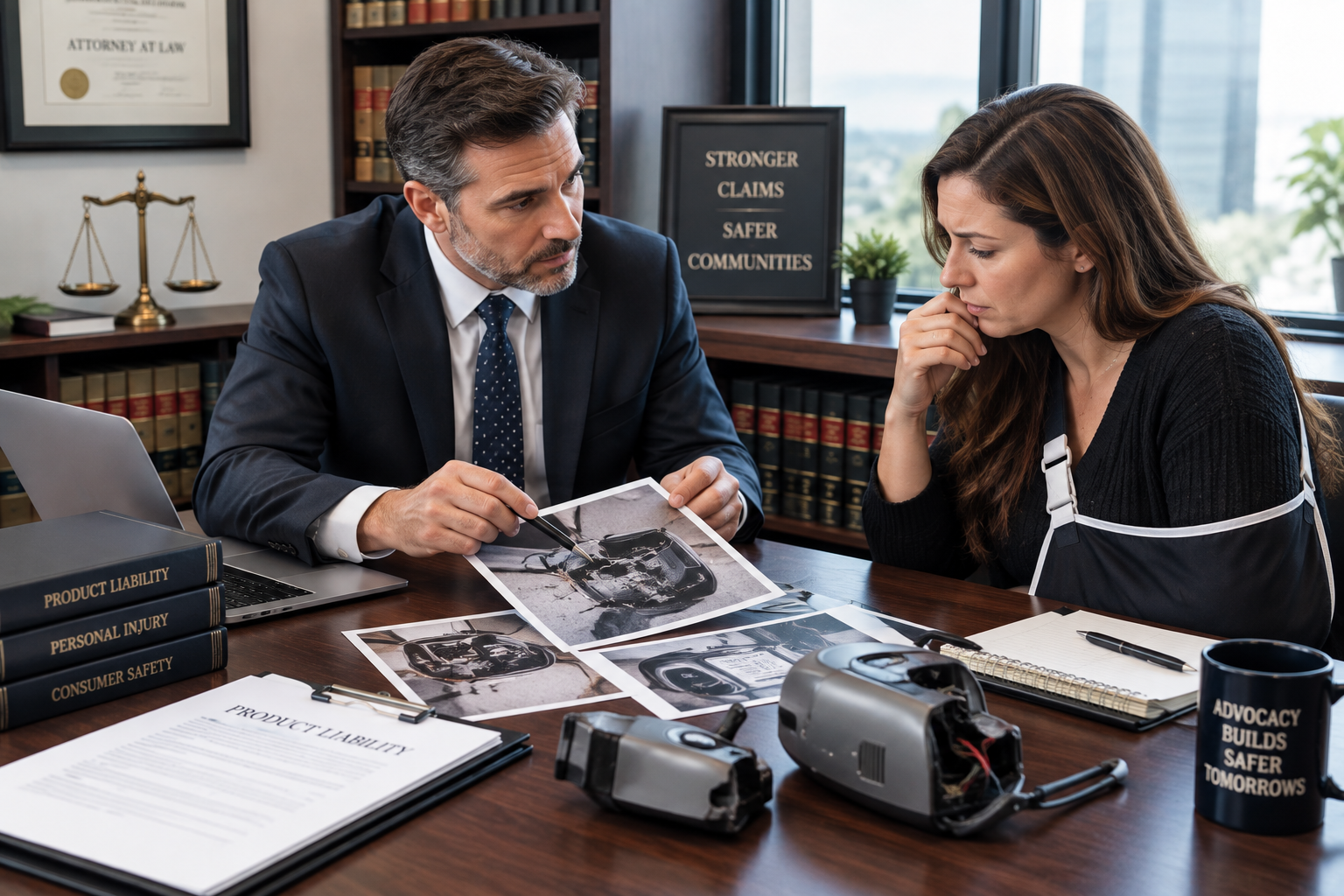
Personal injury attorney reviewing evidence related to a defective product claim with an injured client

When we purchase a product, we expect it to be reasonably safe when used as intended. Whether it is a household appliance, vehicle component, medical device, medication, tool, toy, food product, or piece of machinery, consumers should not have to anticipate that an ordinary product will cause serious harm. Unfortunately, defective products can lead to devastating injuries, expensive medical treatment, lost income, and long-term changes to a person's life.

At Zaveri Law Firm, our team represents individuals who have been injured because of defective or unsafe products. Our Product Liability services focus on investigating what happened, identifying potentially responsible parties, preserving evidence, and pursuing compensation for the harm caused. Our firm explains that defective products can involve manufacturers, distributors, and sellers, depending on the circumstances of the case.

Understanding what may constitute a product liability claim can help injured consumers take appropriate steps after an accident.


What Is a Defective Product Claim?

A defective product claim generally involves an injury or other legally recognized harm caused by a product that was defective or unreasonably dangerous. The defect may involve the product's design, manufacturing process, or warnings and instructions.

A product does not necessarily have to be completely unusable to create a liability issue. A product may look normal and operate as expected while still containing a dangerous defect. In other situations, only one unit in a larger product line may have been improperly manufactured.

Our team examines the specific circumstances rather than assuming that every product-related injury involves the same legal theory. Read more injury insights on our blog.


Design Defects

A design defect generally exists when the underlying design creates an unreasonable safety risk. The product may have been manufactured exactly according to its specifications, yet the design itself may make the product dangerous.

For example, a product may lack an appropriate safety feature or may be designed in a way that creates an unnecessary risk during foreseeable use.


Manufacturing Defects

A manufacturing defect can occur when a particular product differs from its intended design because of an error during production, assembly, or handling.

A product line may have been designed safely, but an individual unit could contain a missing component, incorrect material, damaged part, or assembly error. Evidence concerning the particular product can become especially important in these cases.


Marketing and Warning Defects

Some products can become dangerous when consumers are not provided with adequate warnings, instructions, or information about foreseeable risks.

Our investigation may examine whether the warnings were clear, whether instructions were adequate, and whether consumers received information necessary to use the product safely.


Who May Be Responsible for a Defective Product?

Product liability cases can involve more than one business or individual. Depending on the facts, potentially responsible parties may include manufacturers, distributors, retailers, or other entities involved in bringing the product to consumers.

Our team investigates the product's history and supply chain to identify the parties connected to the injury. We also examine whether other legal claims may apply, including negligence, strict product liability, or breach of warranty.

Zaveri Law Firm specifically handles product liability matters involving defective or unsafe products and investigates the defect and resulting injuries as part of building a claim.


Manufacturers

Manufacturers may face liability when a product contains a dangerous design, manufacturing defect, or inadequate warning. Establishing responsibility requires examining how the product was designed, produced, tested, packaged, and distributed.


Distributors and Sellers

Distributors and sellers can also become involved in product liability claims. Our investigation can identify how the product reached the consumer and whether multiple parties may have legal responsibility.


What Injuries Can Defective Products Cause?

Defective products can cause injuries ranging from relatively minor harm to catastrophic and permanent injuries. The nature of the injury often depends on the type of product and how the defect caused the accident.

Examples can include burns, fractures, lacerations, traumatic brain injuries, spinal injuries, internal injuries, poisoning, organ damage, and other serious medical conditions. Defective medical devices and medications can create particularly complicated claims because the underlying injury may develop over time.

Our team evaluates both the immediate injury and the broader consequences. Medical expenses, rehabilitation, lost income, future treatment, pain, emotional suffering, and changes to a person's ability to work or enjoy everyday activities may all be relevant when pursuing compensation.


What Should You Do After a Defective Product Injury?

The actions taken immediately after an injury can affect the evidence available later. Safety and medical treatment should come first, followed by steps that help preserve information about the incident.


Get Medical Attention

Seek appropriate medical treatment as soon as possible. Tell medical professionals how the injury happened and follow recommended treatment. Medical records can help document the nature, severity, and progression of the injuries.


Preserve the Product

Do not throw away the product that allegedly caused the injury. If possible, keep the product, packaging, instructions, receipts, labels, serial numbers, and related materials in their existing condition.

Do not repair, alter, dismantle, or dispose of the product before speaking with our team. Physical evidence can be extremely important when investigating whether a defect exists.


Photograph the Scene and Product

Photographs and videos can preserve information that may later change. Images of the product, damaged components, packaging, accident location, and visible injuries may help document what happened.


Keep Related Records

Save receipts, purchase confirmations, warranties, instruction manuals, recall notices, medical bills, medical records, wage information, and correspondence connected to the product or accident.

These records can help our team develop a clearer picture of the incident and its financial consequences.


How Our Team Investigates a Product Liability Claim

Product liability cases can require detailed investigation because the defect may not be obvious to an injured consumer. Our team reviews the circumstances surrounding the accident and identifies evidence that can support the claim.


Examining the Product

The actual product may provide important evidence. Our investigation can focus on damaged components, design characteristics, manufacturing irregularities, warning labels, safety features, and other relevant details.


Reviewing Documentation

We may examine purchase records, product instructions, warranty information, maintenance records, photographs, medical documentation, and other available evidence.


Working With Appropriate Experts

Some defective product cases involve technical questions that require specialized analysis. Depending on the circumstances, our team may work with appropriate professionals who can evaluate engineering, manufacturing, medical, or other technical issues.

The purpose is to understand what failed, why it failed, and how the failure relates to the injury.


What Compensation May Be Available?

The potential value of a product liability claim depends on the circumstances and the extent of the resulting harm. Compensation may include medical expenses, rehabilitation costs, lost income, reduced earning capacity, pain and suffering, emotional distress, and other losses recognized by law.

Serious injuries may require continuing medical care or long-term rehabilitation. Our team considers both current losses and the potential future impact of the injury when evaluating a claim.

No two cases are identical. The nature of the defect, severity of the injury, available evidence, responsible parties, and overall effect on the victim can all influence the claim.


Why You Should Contact Our Team Early

Product liability cases can involve evidence that becomes harder to obtain as time passes. Products may be discarded, altered, repaired, recalled, or replaced. Witness memories can also fade.

Contacting our team early allows us to begin evaluating the circumstances and determining what evidence should be preserved. We can handle communications related to the legal claim while you focus on obtaining appropriate medical care.

Do not talk to insurance companies without legal representation. If an insurance company contacts you after a defective product injury, speak to the Zaveri Law Firm first. Our team can handle communications with insurance companies and work to protect your interests throughout the process.


Frequently Asked Questions

Can I file a claim if I did not purchase the product?

Possibly. Product liability claims are not necessarily limited to the person who purchased a product. The circumstances surrounding possession, use, injury, and the applicable legal theory all matter. Our team can review the facts and determine whether you may have a viable claim.

What if the product was recalled?

A recall can provide important information about a potential safety issue, but it does not automatically determine the outcome of an individual injury claim. Our team can investigate the recall, the product involved, the timing, and the connection between the alleged defect and the injury.

What if I no longer have the product?

Losing or discarding the product does not necessarily mean there is no possible claim. Other evidence may exist, including photographs, purchase records, medical records, witness statements, product documentation, or information concerning similar products. However, preserving the product whenever possible is strongly recommended.

What if the manufacturer says the product was used incorrectly?

That may become an issue in a product liability case. Our team examines how the product was designed, the instructions provided, the circumstances of use, and the nature of the accident rather than accepting an assertion without investigation.

Should I speak directly with the manufacturer's insurance company?

Do not talk to insurance companies without legal representation. Instead, contact Zaveri Law Firm. Our team will handle communications with insurance companies and work to protect your legal interests.

How long do I have to pursue a defective product claim?

Deadlines can apply to personal injury and product liability claims, and the applicable deadline depends on the circumstances. Waiting too long can jeopardize a claim. Contact our team promptly so we can evaluate your situation and determine the appropriate next steps.


Conclusion

A defective product can transform an ordinary purchase into a serious accident with lasting consequences. Identifying the defect, preserving the product, documenting the injury, determining who may be responsible, and establishing the connection between the product and the harm can require a detailed investigation.

At Zaveri Law Firm, our team handles Product Liability matters involving defective and unsafe products. We investigate the circumstances, review available evidence, identify potentially responsible parties, and pursue compensation for injuries and losses. Our firm emphasizes thorough preparation and client-focused representation in personal injury matters.

If you or a loved one has suffered an injury because of a defective product, do not face the situation alone. Do not talk to insurance companies without legal representation. Speak with the Zaveri Law Firm so our team can evaluate your circumstances and handle communications with insurance companies on your behalf.

Our team is available to discuss your potential Product Liability claim and explain your legal options.

Zaveri Law Firm
Phone: (240) 292-8374
Address: 516 N Charles St #400, Baltimore, Maryland, MD 21201
Website: zaverilawfirm.com

If a defective or unsafe product caused your injury, contact us for a consultation. Let our team investigate the circumstances, protect your interests, and pursue the compensation you may be entitled to seek.

Dangerous Medical Devices: When Defective Products Cause Serious Injury

What Does an Atlanta Car Accident Lawyer Do? | Georgia | Rafi Law Firm

Medical devices are designed to improve health, restore function, and save lives. Millions of people rely on implants, surgical tools, prosthetics, pacemakers, joint replacements, infusion pumps, and other medical devices every day. Patients trust that these products have been properly designed, thoroughly tested, and manufactured according to strict safety standards before reaching hospitals and clinics.

Unfortunately, that trust is sometimes misplaced.

When a medical device contains a defect, the consequences can be devastating. A device failure can lead to severe injuries, additional surgeries, permanent disabilities, worsening medical conditions, infections, organ damage, and even death. Patients who sought treatment to improve their health may instead find themselves facing years of pain, medical expenses, and uncertainty.

In these situations, manufacturers and other responsible parties may be held accountable through product liability claims. Defective medical device cases often involve complex legal and medical issues, making it important for injured individuals to understand their rights and seek experienced legal representation.

At Zaveri Law Firm, we help injury victims pursue justice when dangerous products cause harm. Our firm is dedicated to protecting individuals and families who have suffered because of negligence and defective products. We understand the life-changing impact a defective medical device can have and work tirelessly to pursue compensation for our clients.


Understanding Medical Device Product Liability

Product liability law allows injured consumers to seek compensation when a defective product causes harm.

Unlike many personal injury cases that focus on proving negligence, some product liability claims may be based on strict liability. This means that an injured person may not need to prove the manufacturer acted carelessly. Instead, they may need to show that the product was defective and that the defect caused their injuries.

Medical device manufacturers have a responsibility to place reasonably safe products into the marketplace. When they fail to do so, patients may have legal options.

Medical device product liability claims generally fall into three categories:


Design Defects

A design defect exists when a product is inherently dangerous because of the way it was designed.

Even if every device is manufactured exactly as intended, the product may still pose unreasonable risks to patients.

Examples include:

In these situations, the problem is not a manufacturing error. The problem is the design itself.


Manufacturing Defects

Manufacturing defects occur during production.

A product may have been designed appropriately, but mistakes during manufacturing create dangerous conditions.

Examples include:

A manufacturing defect may affect a single device, a batch of products, or an entire product line.


Failure to Warn

Medical device companies have a duty to provide adequate warnings about known risks.

Doctors and patients should receive clear information regarding:

When manufacturers fail to provide sufficient warnings, patients may suffer preventable injuries.

Failure-to-warn claims often arise when manufacturers knew—or should have known—about serious risks but failed to disclose them adequately.


Common Types of Dangerous Medical Devices

Defective medical devices can be found in virtually every area of healthcare.

Some products have generated thousands of injury claims nationwide.


Hip Replacement Implants

Hip replacement surgery is intended to restore mobility and reduce pain, according to Mayo Clinic.

However, some metal-on-metal hip implants have been linked to:

Patients may require additional procedures when these implants fail prematurely.


Surgical Mesh

Surgical mesh is frequently used to treat hernias and pelvic organ prolapse.

Some products have been associated with:

Many patients require corrective surgeries to address complications.


Pacemakers and Defibrillators

Cardiac devices play a critical role in regulating heart rhythms.

Defects may lead to:

A malfunctioning cardiac device can create life-threatening situations.


Infusion Pumps

Infusion pumps deliver medication directly into a patient's body.

When these devices malfunction, patients may receive:

Such failures can result in severe complications.


Joint Replacements

Knee, shoulder, and ankle replacement devices may fail due to:

Patients may experience pain, instability, and the need for revision surgeries.


Surgical Instruments

Defective surgical tools can break during procedures or function improperly, increasing the risk of:


How Medical Device Defects Cause Serious Injuries

A defective medical device can affect nearly every aspect of a person's life.

Physical injuries are often only part of the problem.

Victims may also face emotional distress, financial hardship, and long-term medical complications.

Common injuries associated with defective medical devices include:


Chronic Pain

Persistent pain can continue for months or years following device failure.

Many victims experience reduced mobility and diminished quality of life.


Internal Organ Damage

Defective devices can damage nearby organs and tissues.

In some cases, permanent injuries occur before the defect is discovered.


Infections

Medical device failures may increase the risk of serious infections.

Severe infections can require hospitalization and additional surgeries.


Nerve Damage

Defective implants and surgical complications can cause nerve injuries that result in:


Loss of Mobility

Failed implants may limit a person's ability to walk, work, or perform daily activities.


Additional Surgeries

Many patients must undergo revision procedures to remove or replace defective devices.

These surgeries often carry additional risks and lengthy recovery periods.


Wrongful Death

Tragically, some defective medical devices contribute to fatal injuries and complications.

Families may be left dealing with emotional trauma, financial losses, and unanswered questions.


Who May Be Liable for a Defective Medical Device?

Medical device cases often involve multiple potentially responsible parties.

Depending on the circumstances, liability may extend to:


Manufacturers

Manufacturers are frequently the primary defendants in defective medical device claims.

They may be responsible for:


Component Manufacturers

Individual parts used within a medical device may contain defects.

Companies producing those components may share liability.


Distributors

Businesses involved in distributing defective products may sometimes be held accountable.


Suppliers

Suppliers who contribute to unsafe products may face legal responsibility in certain cases.


Healthcare Providers

Although product liability cases generally focus on defective products, healthcare providers may sometimes contribute to injuries through improper use or implantation of a device.

Each case requires a careful investigation to identify all responsible parties.


Warning Signs That a Medical Device May Be Defective

Patients often do not realize immediately that a defective device is causing their symptoms.

Potential warning signs include:

If a patient suspects a medical device failure, seeking prompt medical attention is important.

Medical records often become critical evidence in a future legal claim.


The Importance of Medical Device Recalls

Recalls occur when safety concerns are identified after products enter the marketplace.

A recall may be initiated by:

However, a recall does not automatically compensate injured patients.

Many individuals continue to suffer serious harm even after a product is removed from the market.

A recall may strengthen evidence that a product was defective, but victims still need to pursue legal action to recover compensation.


Compensation Available in Defective Medical Device Cases

Victims of dangerous medical devices may face enormous financial and personal losses.

Depending on the circumstances, compensation may include:


Medical Expenses

This may include:


Lost Income

Many victims miss work while recovering.

Some are unable to return to their previous occupations.


Loss of Future Earning Capacity

Permanent injuries may affect long-term earning potential.


Pain and Suffering

Compensation may be available for physical pain, emotional distress, and reduced quality of life.


Disability and Disfigurement

Serious injuries can result in lasting disabilities and permanent physical changes.


Wrongful Death Damages

Families who lose loved ones may be entitled to compensation for:


Why Defective Medical Device Cases Are Complex

Medical device litigation is often significantly more complicated than many other injury claims.

These cases frequently involve:

Large manufacturers often have substantial resources dedicated to defending claims.

Victims deserve legal representation capable of thoroughly investigating the facts and building a strong case.

At Zaveri Law Firm, we understand the challenges involved in complex injury litigation. Our team works diligently to pursue accountability and justice for individuals harmed by negligence and defective products, sharing regular safety updates and insights on our blog.


What To Do If You Believe a Medical Device Caused Your Injury

If you suspect a defective medical device contributed to your injuries, consider taking the following steps:


Seek Medical Care

Your health should always come first.

Prompt medical evaluation can identify complications and create important documentation.


Preserve Evidence

Keep:


Document Symptoms

Maintain a record of:


Avoid Speaking With Insurance Companies Without Legal Representation

Insurance companies often prioritize their own financial interests.

Do not talk to insurance companies without legal representation.

Instead, speak with Zaveri Law Firm. Our team can help protect your rights and handle communications related to your claim.


Contact an Attorney

Early legal guidance can help preserve evidence and identify important legal options.

An attorney can investigate the circumstances surrounding the defective device and determine potential sources of liability.


How Zaveri Law Firm Can Help

When a defective medical device causes serious injury, victims often feel overwhelmed.

Medical bills continue to accumulate. Recovery may be uncertain. Families may struggle to understand what happened and who should be held responsible.

Zaveri Law Firm is committed to helping injury victims pursue accountability and compensation. Our firm represents individuals harmed by negligence, medical injuries, and dangerous products. We take a client-focused approach and work diligently to investigate claims, gather evidence, and advocate for those who have been injured.

We understand that every case is unique.

Whether your injury involves a defective implant, surgical device, infusion pump, or another medical product, our team is prepared to evaluate your situation and discuss your legal options.


Frequently Asked Questions

Can I file a claim if my medical device was recalled?

Possibly. A recall may serve as evidence that a product was defective, but additional factors determine whether a legal claim exists.

What if my doctor did not tell me the device was defective?

You may still have a valid claim. Many patients learn about defects only after experiencing complications.

How long do I have to file a claim?

Deadlines vary depending on the facts of the case. Speaking with an attorney as soon as possible is important.

What compensation can I recover?

Compensation may include medical expenses, lost income, pain and suffering, disability-related losses, and other damages.

Do all defective medical device cases go to trial?

Not necessarily. Some claims resolve through settlements, while others proceed through litigation.

What if I am not sure whether a device caused my injury?

An attorney can investigate your medical history, device information, and available evidence to determine whether a defect may have contributed to your injuries.


Conclusion

Medical devices are intended to improve lives, not cause additional suffering. Unfortunately, defective products continue to injure patients across the country. When manufacturers place dangerous devices into the marketplace or fail to warn patients about known risks, the consequences can be catastrophic.

Victims may face extensive medical treatment, mounting expenses, lost income, chronic pain, and life-changing disabilities. In the most tragic cases, families lose loved ones because a product failed when it was needed most.

If you or someone you love has been harmed by a defective medical device, understanding your legal rights is an important first step. A thorough investigation can help determine whether a dangerous product contributed to your injuries and who may be held accountable.

If you believe a defective medical device caused serious injury, contact Zaveri Law Firm to discuss your situation.

Do not talk to insurance companies without legal representation.

Let our team evaluate your case and help you understand your legal options.

Zaveri Law Firm

📍 Address: 516 N Charles St #400, Baltimore, Maryland, MD 21201
📞 Phone: (240) 292-8374
📧 Email: kzaveri@zaverilawfirm.com
🌐 Website: zaverilawfirm.com

Schedule a consultation today to learn how Zaveri Law Firm can help you pursue justice after a serious injury caused by a dangerous medical device.